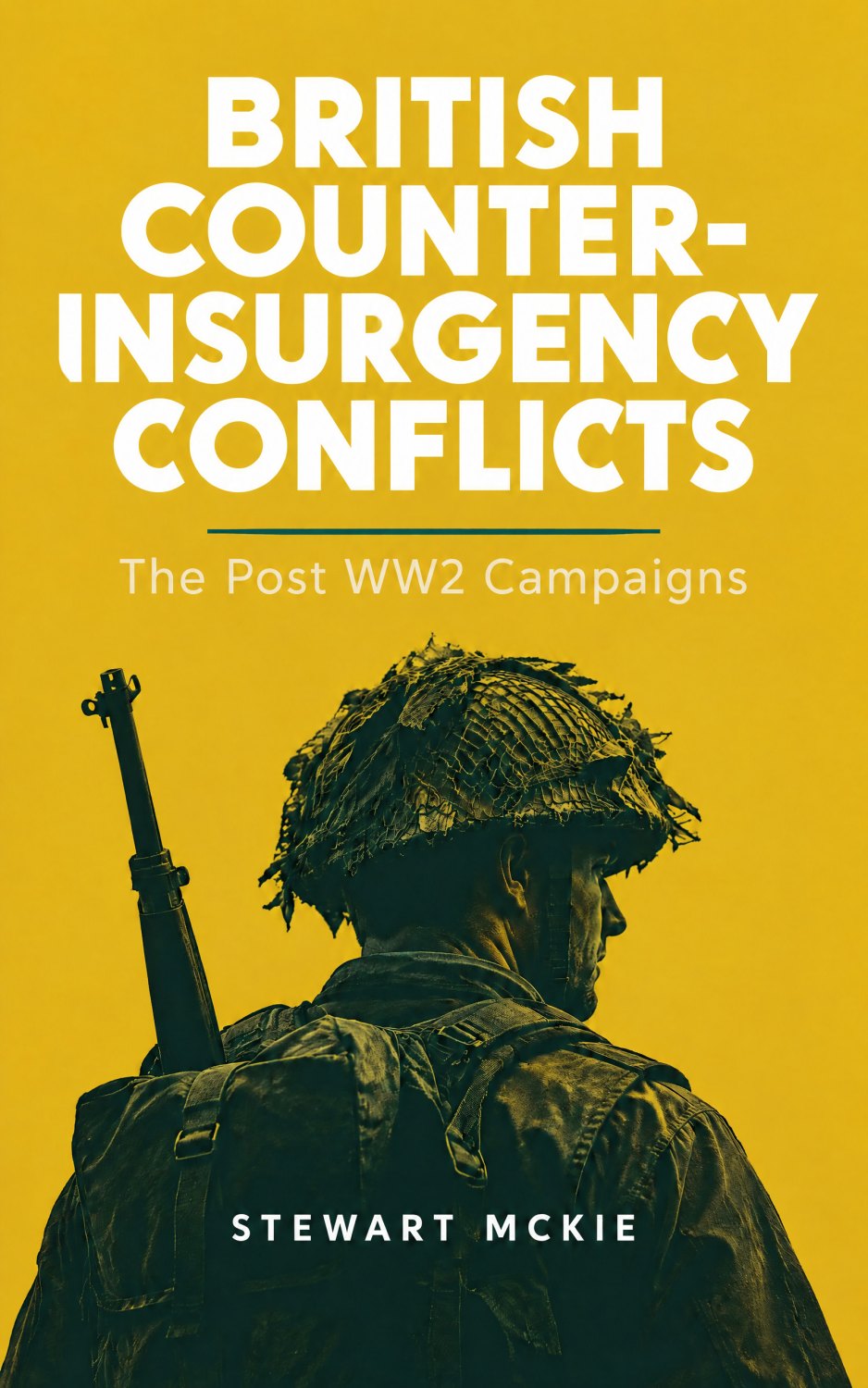
British Counter-Insurgency Conflicts
From Palestine to Helmand: The Post WW2 Campaigns
AI-generated
Written by AI. Tools: Claude Sonnet 4.6 (outline), Claude Haiku 4.5 (chapters, blurb), OpenAI gpt-image-1 (cover), via aibookbot · with corrections and notes by the author
Download: PDF 435 KB EPUB 251 KB · The EPUB reflows to fit phones and e-readers.
0 views 0 downloads Published 11 October 2026
This book is essential reading for those seeking to understand how Britain's armed forces engaged in counter-insurgency operations across the second half of the twentieth century. From Palestine's collapse through Northern Ireland's political settlement, the author traces the empirical development of doctrine forged through operational experience rather than formal policy, revealing patterns that defined Britain's approach to small wars.
Readers will gain authoritative insight into the fundamental tension between military success and political victory. Through detailed examination of campaigns from Malaya's decisive victory to Afghanistan's strategic stalemate, the book demonstrates how counter-insurgency doctrine evolved to address intelligence primacy, civil-military coordination, and population protection—yet remained constrained by legitimacy, state capacity, and structural conditions beyond military technique.
This is history written for those who recognise that understanding Britain's counter-insurgency experience illuminates enduring strategic challenges: the limits of force when political foundations are absent, and the necessity of integrating military, political, and administrative action in conflicts that cannot be won by soldiers alone.
Readers will gain authoritative insight into the fundamental tension between military success and political victory. Through detailed examination of campaigns from Malaya's decisive victory to Afghanistan's strategic stalemate, the book demonstrates how counter-insurgency doctrine evolved to address intelligence primacy, civil-military coordination, and population protection—yet remained constrained by legitimacy, state capacity, and structural conditions beyond military technique.
This is history written for those who recognise that understanding Britain's counter-insurgency experience illuminates enduring strategic challenges: the limits of force when political foundations are absent, and the necessity of integrating military, political, and administrative action in conflicts that cannot be won by soldiers alone.