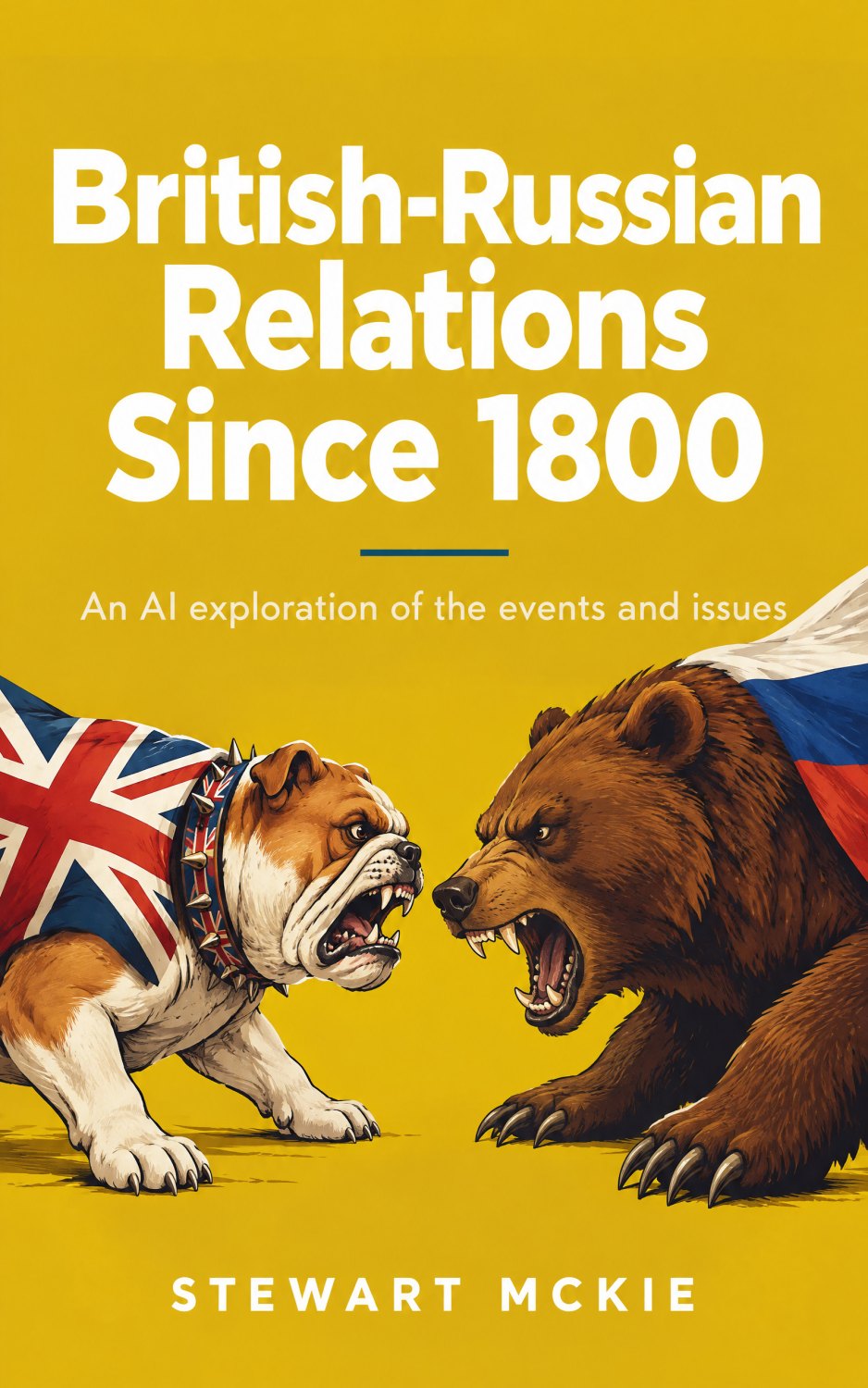
British-Russian Relations Since 1800
A Layman's Guide to Two Centuries of Alliance, Rivalry and Suspicion
AI-generated
Written by AI. Tools: TRIPOS Book
Download: PDF 1.2 MB EPUB 1023 KB · The EPUB reflows to fit phones and e-readers.
0 views 0 downloads Published 28 September 2026
For readers seeking to understand one of history's most consequential relationships, this book offers an accessible yet authoritative guide to two centuries of British-Russian rivalry, alliance, and suspicion. Whether you're puzzled by current geopolitical tensions or simply curious about how two great powers have navigated their conflicting interests, this introduction provides the historical foundation you need.
From Napoleon's defeat to Ukraine's invasion, British-Russian relations have cycled through dramatic reversals driven by strategic necessity rather than shared values. This book traces those patterns clearly, showing how geographic interests, imperial ambitions, and ideological divides have repeatedly pushed these powers from uneasy partnership to open hostility. You'll discover why their relationship has never followed a simple arc and why understanding history matters for making sense of today's confrontation.
By examining recurring themes across two centuries—mutual misreading, structural incompatibility, and the tension between commerce and security—McKie reveals the logic underlying British-Russian relations. This is essential reading for anyone wanting to grasp not just what happened between these powers, but why it happened and what it suggests about the future.
From Napoleon's defeat to Ukraine's invasion, British-Russian relations have cycled through dramatic reversals driven by strategic necessity rather than shared values. This book traces those patterns clearly, showing how geographic interests, imperial ambitions, and ideological divides have repeatedly pushed these powers from uneasy partnership to open hostility. You'll discover why their relationship has never followed a simple arc and why understanding history matters for making sense of today's confrontation.
By examining recurring themes across two centuries—mutual misreading, structural incompatibility, and the tension between commerce and security—McKie reveals the logic underlying British-Russian relations. This is essential reading for anyone wanting to grasp not just what happened between these powers, but why it happened and what it suggests about the future.