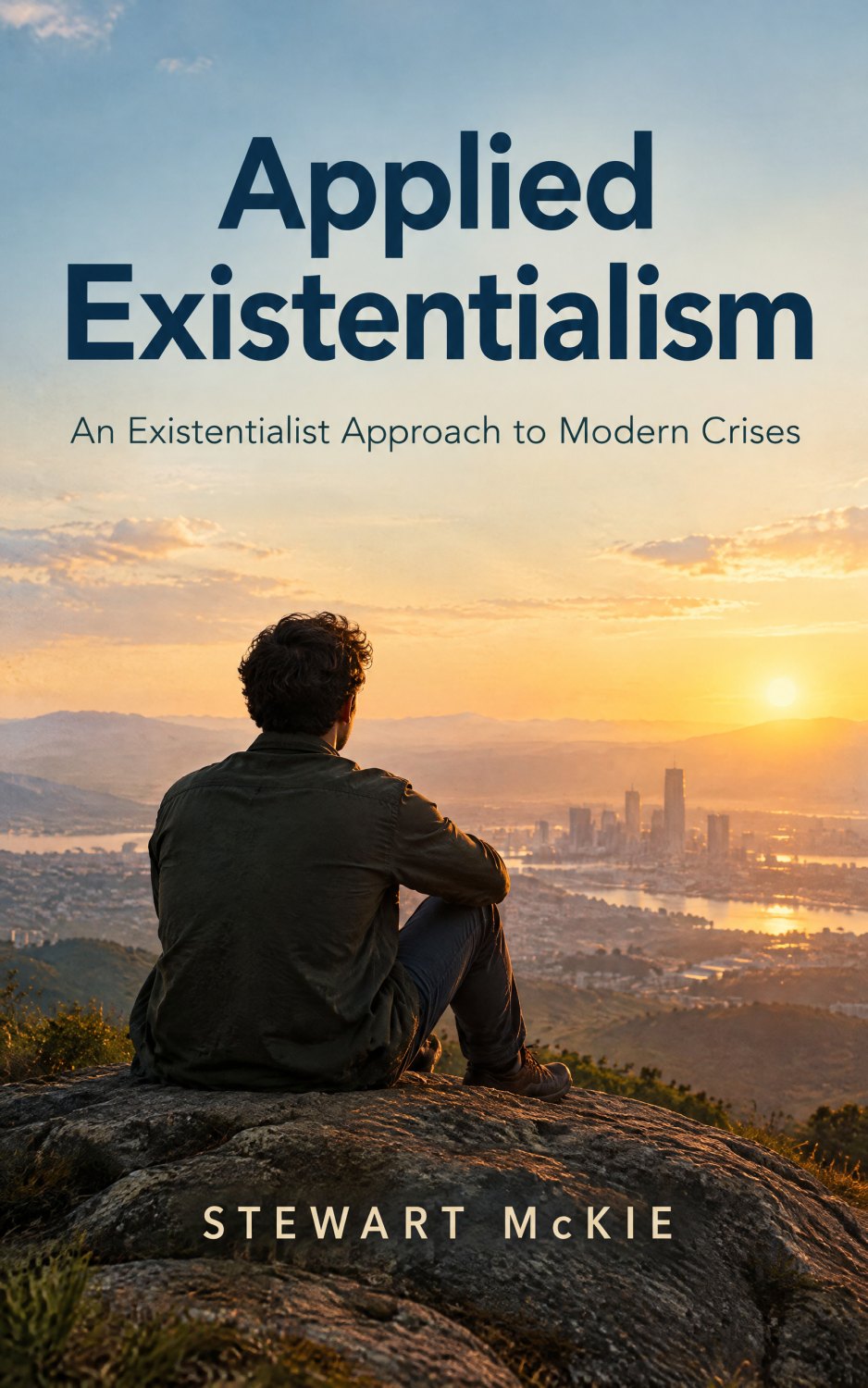
Applied Existentialism
An Existentialist Approach to Modern Crises
AI-generated
Written by AI. Tools: Claude Sonnet 4.6 (outline), Claude Haiku 4.5 (chapters, blurb), OpenAI gpt-image-1 (cover), via aibookbot
Download: PDF 542 KB EPUB 317 KB · The EPUB reflows to fit phones and e-readers.
0 views 0 downloads Published 16 October 2026
We live in times of acute crisis—technological, political, ecological, psychological—that demand more than technical solutions. This book is for readers who sense that something fundamental is broken in how we live, think, and relate to one another, and who are willing to grapple with serious philosophy to understand why. If you find yourself frustrated by shallow self-help, exhausted by algorithmic curation, troubled by political paralysis, or struggling to construct meaning in a secular age, this book offers a rigorous framework for making sense of your condition.
Applied Existentialism translates the great existentialist thinkers—Sartre, Camus, de Beauvoir, Heidegger—from twentieth-century European crisis into concrete diagnosis of our present moment. You will discover how existentialist concepts illuminate everything from social media inauthenticity to climate responsibility, from AI's rise to mass migration, from surveillance to disinformation. More importantly, you will gain practical disciplines for living authentically despite systematic pressure toward conformity and self-deception.
This book demands active engagement rather than passive consumption. It will challenge your assumptions, make you uncomfortable, and insist on your freedom and responsibility in ways contemporary culture systematically discourages. But it offers something increasingly rare: a serious philosophy for examined living.
Applied Existentialism translates the great existentialist thinkers—Sartre, Camus, de Beauvoir, Heidegger—from twentieth-century European crisis into concrete diagnosis of our present moment. You will discover how existentialist concepts illuminate everything from social media inauthenticity to climate responsibility, from AI's rise to mass migration, from surveillance to disinformation. More importantly, you will gain practical disciplines for living authentically despite systematic pressure toward conformity and self-deception.
This book demands active engagement rather than passive consumption. It will challenge your assumptions, make you uncomfortable, and insist on your freedom and responsibility in ways contemporary culture systematically discourages. But it offers something increasingly rare: a serious philosophy for examined living.